By the time most buyers find out the truck can’t tow it, they’ve already signed.
Here’s the thing I kept running into. Almost everything you need to avoid a bad
trailer purchase is already written down somewhere — in recall filings, federal regulations,
warranty documents, manufacturer footnotes. It’s just boring enough that nobody reads it.
Including, quite often, the person selling you the trailer.
So I read it, and I wrote down what’s in there. Every number has a source and a
date, and when a figure comes from someone with something to sell — a dealer, a shop, an
inspector — I say so, because you should weigh it differently.
I’m not going to talk you out of buying a trailer. I’d just like you to know
what to check first.
Instant PDF download · Secure checkout via Gumroad · 7-day refund, no questions asked
The number that decides it
The window sticker says 11,000 lb. Your door sticker says you’re already over.
Published tow ratings are real numbers from a real test — SAE J2807. They also describe a truck
loaded with a 150 lb driver, a 150 lb passenger and nothing else. No back seat, no cooler, no dog,
no tools in the bed.
Ford says so in its own towing guide: “Weight of additional options, passengers, cargo and
hitch must be deducted from this weight.”
The figure that actually governs your life is the payload number on the yellow label inside your
driver’s door. Here is what happens to it when you hitch up a 7,500 lb trailer.
Worked example, Part One
A half-ton crew cab with 1,570 lb of payload, towing 7,500 lb loaded
Payload, from the door sticker1,570 lb
Driver and passenger−340 lb
Gear in the bed−200 lb
Tongue weight at 15%The trailer presses down on the truck. It counts against payload, not against tow rating.−1,125 lb
Remaining−95 lb
Over payload in the driveway with nothing loaded — while the
window still advertises thousands of pounds of apparent headroom. No hitch, airbag or helper spring
changes a weight rating.
What getting it wrong costs
One mistake, priced against two books.
These are the figures the guides will actually stand behind, with the kind of source each
one came from. Any single line here is larger than both guides together.
The arithmetic of one bad Saturday
Reported US figures, 2026
Roof resealing labour, about ten hours
Owner-reported dealer quote~$2,300
Full roof membrane replacement
Owner-reported dealer quote~$12,000
The independent inspection people skip
Inspector-published pricing — a commercially interested source$700–$1,500
Year one of a new trailer’s depreciation
J.D. Power: a travel trailer holds roughly 60% at five years, and year one is the steepest partthousands
A trailer your truck cannot legally tow
No accessory fixes thisa different truck
Both guides, read before you go$40
Every figure above carries its source, the way it does inside the
books. Where a number comes from a dealer, a shop or an inspector — someone with a commercial
interest — it says so, because you should weigh it differently. Prices change; verify locally.
The guides
Read one, or work through both.
Both are instant PDF downloads, set in large type for comfortable reading, and both carry
the same seven-day refund.
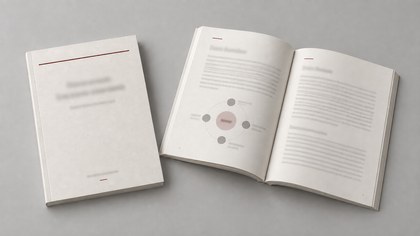
The Trailer Truth Manual
35 pages · five parts · PDF
$29
Part One — the truck. The payload arithmetic, worked twice, and why it eliminates half the lot before you visit.
Part Two — the build. How a laminated wall fails, what Azdel does and doesn’t mean, and reading tyre date codes.
Part Three — the paperwork. The resealing clause in your warranty, recalls, and where a dealer’s obligation stops.
Part Four — the money. Depreciation, the current soft market, and what actually holds value.
Twenty-five claims. Each one checked, each one rated.
The RV world runs on repeated advice. Someone says it on a forum, someone puts it in a
video, and within a year it’s common knowledge. Some of it is true. Several of the loudest ones
are not. This is exactly how those pages read.
01
“The advertised tow rating isn’t the number that matters.”
Ford’s own towing guide states that maximum weights assume a 150 lb driver
and passenger, and that options, passengers, cargo and hitch must be deducted. Payload is the
binding constraint for most half-ton owners.
Verified
02
“Your insurance will deny your claim if you’re overweight.”
Standard US personal auto policy forms contain no over-GVWR exclusion. The article
this claim is usually traced to actually debunks it. What is real: operating without the licence
class your combination requires.
Myth
03
“A weight-distribution hitch increases your capacity.”
It redistributes load across axles. It does not raise payload, GVWR, GCWR, axle
ratings, tyre capacity or the tow rating — and the hardware itself subtracts from payload.
Myth
09
“70% of retirees regret buying an RV within a year.”
No study supports this. The identical 70% appears attached to RVs, motorhomes,
camper vans and catamarans interchangeably — which is what a content template looks like,
not what data looks like.
Myth
14
“The dealer has to fix open recalls before selling it to me.”
True for new vehicles: federal law prohibits delivery once the dealer has
notice. Not true for used — federal law neither requires the dealer to check nor
prohibits the sale. Run the VIN yourself.
Partial
18
“‘Four season’ means it’s built for winter.”
There is no ANSI, NFPA or RVIA standard defining the term. What is checkable:
whether the underbelly is enclosed and heated, whether the tanks have pads, and what the
insulation actually is. Ask for specifics; ignore the badge.
Myth
+ nineteen more, each with the source you can go and read yourself.
7
Day refund
Read the whole thing first. Then decide.
Download it, go out to the driveway and do the payload arithmetic on your own truck, and take the
Checklist to a lot. If it doesn’t change a decision you were about to make, email within seven
days and you get every cent back.
No forms, no “what went wrong”, no keeping you on a list. The refund window is
longer than it takes to read both guides, and the whole point of the books is that nobody should be
rushing you into anything — including me.
Questions
Before you buy either one.
I haven’t bought the truck or the trailer yet. Is this still useful?
That’s the best time to read it. Part One works in both directions: it tells
you which trailers a given truck rules out, and which truck a given trailer actually requires. Read
before you fall in love with a floorplan and it saves you the whole problem.
Is this US-specific?
Mostly, yes. Weight ratings, the FMVSS door label, NHTSA recall lookups, lender age
caps and licence classes are all US. The physical inspection in the Checklist — walls, seams,
floor, tyres, slides — applies to a laminated trailer anywhere.
Will this go out of date?
Parts of it, and the book says so on its first page. Tow ratings change with model
years, prices change monthly, laws change by state. That’s why every figure carries a date and
a source, and why the book tells you where to verify it yourself rather than asking you to trust
me.
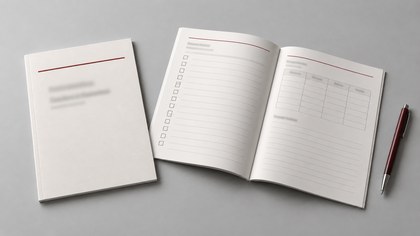
Is the Checklist really printable?
It’s built for it. Ten numbered pages, each one laid out to fit a single sheet
so no section ever splits across two, with printable checkboxes and ruled lines with room to write
by hand. It’s also a fillable PDF, so you can type into it on a phone and save it
instead.
What format is it, and how do I get it?
Instant PDF download after checkout through Gumroad, set on US Letter. It opens on a
phone, a tablet or a computer, and the reference pages and checklists are made to print.
Do I need both?
No, and I’d rather say so. The Manual is the reasoning; the Checklist is the
form you complete standing in front of a specific trailer. The Manual cross-references the
Checklist’s pages, so together they work as one thing — but each stands alone, and if
you only ever read Part One you’ll have got your money’s worth.
What’s the refund policy?
Seven days, no questions asked, on any of the three. Email and you get every cent
back.
One last thing
The label inside your driver’s door settles most of this in about ninety seconds.
Go and look at it before you go anywhere near a lot. If the number
surprises you, the rest of the book will too.